Today, a large share of industrial rubber parts, from tires and conveyor belts to O-rings and sealing strips, are made from synthetic rubber. But not all synthetic rubbers are alike, and choosing the wrong type can drastically shorten a part’s service life. This guide explains what synthetic rubber is, introduces its three most widely used types, SBR, NBR and EPDM, and compares them with natural rubber.
What Is Synthetic Rubber?
Synthetic rubber is a group of elastic polymer materials produced by polymerizing various monomers. Its raw materials are mainly petrochemical feedstocks such as butadiene, styrene, acrylonitrile, ethylene and propylene, and each type has been developed to deliver a specific set of physical and chemical properties.
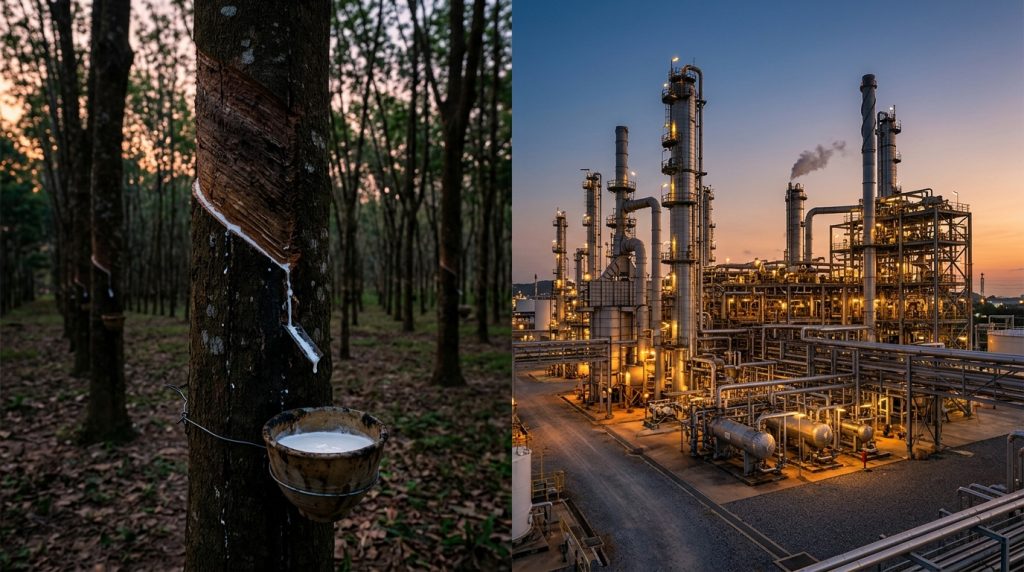
Unlike natural rubber, which comes from the latex of the rubber tree (Hevea brasiliensis), synthetic rubber is produced in petrochemical plants through controlled chemical processes.
The biggest advantage of synthetic rubber is that its properties can be tailored to the needs of an industry. Some types offer high resistance to oil and fuel, some withstand UV radiation and weathering, and others are designed to handle abrasion and mechanical stress. That is why synthetic rubber is widely used in tire manufacturing, automotive, oil and gas, construction, hoses and sealing components.
The Main Types of Synthetic Rubber
Synthetic rubbers are classified by chemical composition, molecular structure and performance characteristics. Among them, SBR, NBR and EPDM are some of the most widely consumed types in industry worldwide.
SBR Rubber (Styrene-Butadiene Rubber)
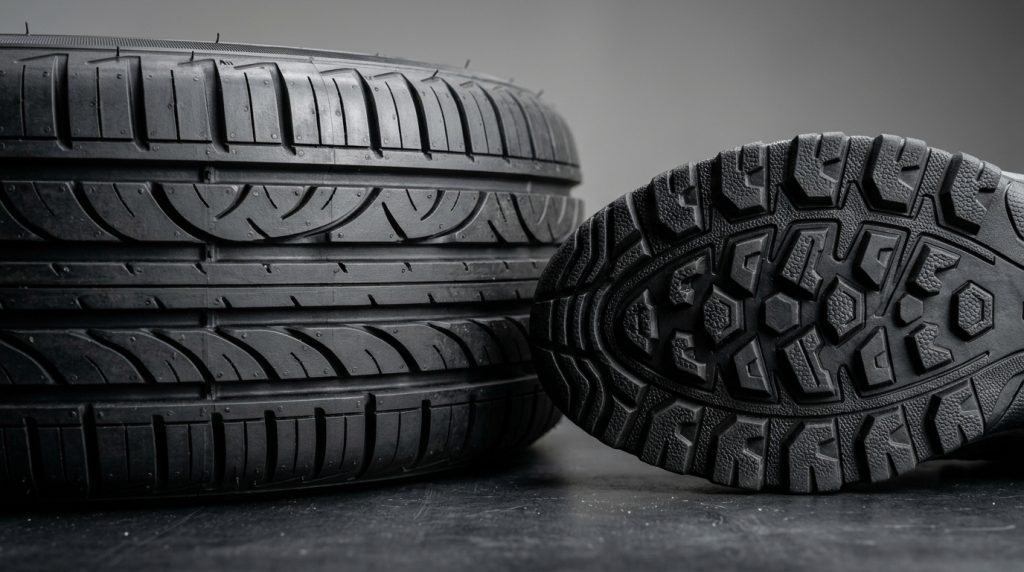
Styrene-butadiene rubber is one of the most widely used synthetic rubbers. It is produced by copolymerizing styrene and butadiene. Good abrasion resistance, solid performance in dynamic applications and a competitive price have earned it a key place in the tire industry.
Key properties of SBR:
- Good abrasion resistance, especially in compounds with reinforcing fillers
- Mechanical properties suitable for many general-purpose applications
- Better heat aging resistance than natural rubber under some conditions
- Blends well with natural rubber and other polymers
- Weakness: poor resistance to oil, fuel and ozone
Industrial applications of SBR:
- Tire treads and other tire components
- Conveyor belts
- Shoe soles
- General rubber goods and abrasion-resistant parts
In tire manufacturing, SBR is often used alongside natural rubber and butadiene rubber (BR) to achieve a balanced combination of abrasion resistance, strength and dynamic performance.
NBR Rubber (Nitrile Butadiene Rubber)
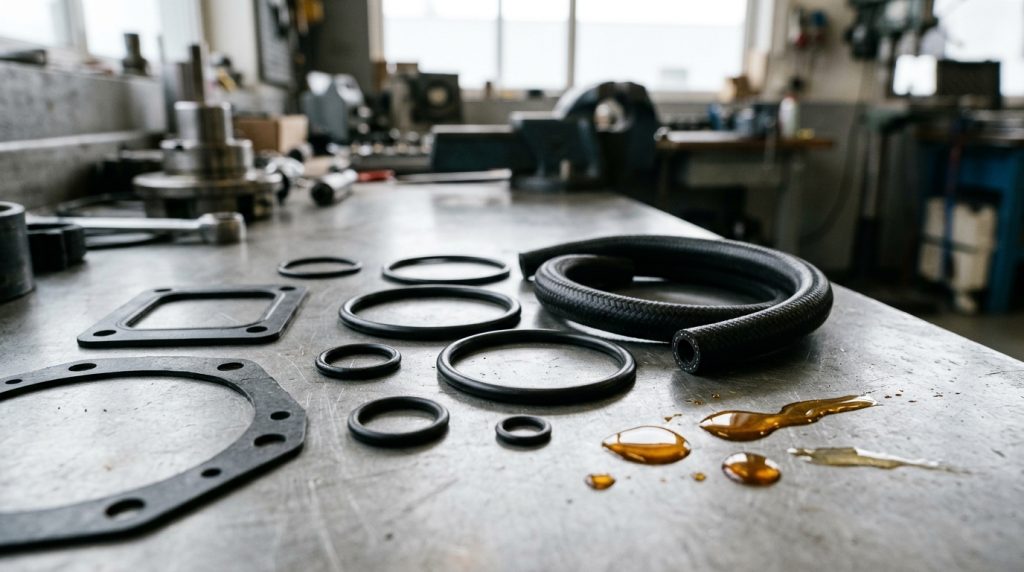
Nitrile butadiene rubber is produced by copolymerizing butadiene and acrylonitrile. Its defining feature is good resistance to mineral oils, fuels and many hydrocarbons.
The acrylonitrile content of NBR plays a decisive role in its properties. A higher acrylonitrile content generally improves oil and fuel resistance but reduces flexibility at low temperatures.
Key properties of NBR:
- High resistance to many oils and fuels
- Good resistance to greases and hydrocarbon fluids
- Well suited to sealing components
- Mechanical properties suitable for industrial applications
- Weakness: limited resistance to ozone and weathering compared with EPDM
Industrial applications of NBR:
- Gaskets and O-rings
- Fuel and oil hoses
- Automotive seals and gaskets
- Hydraulic system components
- Oil-resistant industrial gloves
This makes NBR one of the first choices for parts in constant contact with oil, fuel and lubricants.
EPDM Rubber (Ethylene Propylene Diene Monomer)
EPDM is made from ethylene, propylene and a small amount of a diene monomer. Its polymer backbone is almost fully saturated, and this structure gives it excellent resistance to ozone, UV radiation, heat and moisture.
That makes EPDM a logical choice for parts exposed to sunlight, humidity and temperature changes.
Key properties of EPDM:
- Excellent resistance to ozone and weathering
- Good UV resistance
- Good thermal stability
- Good resistance to water and steam
- Flexibility across a wide temperature range
- Weakness: poor resistance to mineral oils and many fuels
Industrial applications of EPDM:
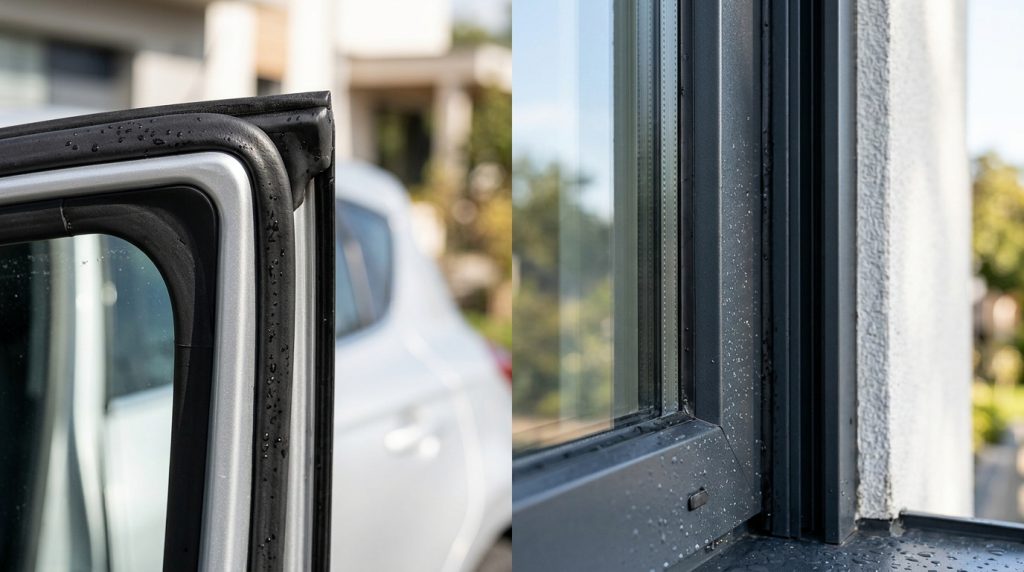
- Automotive door and window seals
- Water and coolant hoses
- Building insulation and weatherstripping
- Industrial gaskets and seals
- Outdoor components and some industrial belts
SBR vs NBR vs EPDM: Comparison
Each of these three synthetic rubbers has different strengths, and the right choice depends on the operating conditions of the final product.
| Property | SBR | NBR | EPDM |
|---|---|---|---|
| Main monomers | Styrene and butadiene | Butadiene and acrylonitrile | Ethylene, propylene and diene |
| Abrasion resistance | Good to very good | Good | Good |
| Oil resistance | Poor | Very good | Poor |
| Ozone resistance | Poor | Poor | Very good |
| Weather and UV resistance | Limited | Limited | Very good |
| Heat resistance | Moderate | Moderate | Good to very good |
| Typical use | Tires, shoe soles | Fuel hoses, O-rings | Sealing strips, water hoses |
This is a general, qualitative comparison. Actual performance depends on the polymer grade, formulation, additives and test conditions.
What Is the Difference Between Natural and Synthetic Rubber?
Natural rubber (NR) and synthetic rubber both belong to the elastomer family, but they differ in origin, chemical structure and performance.
Natural rubber is obtained from the latex of the rubber tree, and its main polymer is cis-1,4-polyisoprene. High tensile strength, excellent tear resistance and good elasticity make it a key material for tires and industrial parts. To learn about its common grades, read Types of Natural Rubber: SMR, RSS and Latex.
Synthetic rubber, by contrast, is produced through chemical processes, and its properties can be engineered. For example, NBR is chosen for oil resistance and EPDM for weather resistance.
Natural vs synthetic rubber at a glance
| Criteria | Natural Rubber (NR) | Synthetic Rubber |
|---|---|---|
| Source | Rubber tree latex | Petrochemical feedstocks |
| Main structure | cis-polyisoprene | Depends on polymer type |
| Tensile strength | Very good | Depends on type and grade |
| Tear resistance | Very good | Variable |
| Abrasion resistance | Very good | Very good in some types |
| Oil resistance | Poor | Very good in NBR |
| Ozone and weather resistance | Poor | Very good in EPDM |
Important: Synthetic rubber is not automatically better than natural rubber. Each suits specific conditions, and in many industrial applications a blend of the two performs better than either one alone.
Applications of Synthetic Rubber Across Industries
Tunable properties and a wide range of grades have given synthetic rubber an important role across many sectors. To see which industries account for the largest share of rubber consumption, read Which Industries Are the Largest Rubber Consumers?
Tire Manufacturing
SBR and BR are core polymers in tire production. Thanks to their abrasion resistance and dynamic performance, they are used alongside natural rubber in various tire compounds.
Automotive
NBR is used for parts in contact with oil and fuel, while EPDM is used for sealing strips, water hoses and weather-resistant components.
Oil, Gas and Petrochemicals
With its resistance to oils and hydrocarbons, NBR is used in seals, hoses and equipment components across this industry.
Construction
EPDM’s resistance to moisture, sunlight and ozone makes it ideal for insulation, weatherstripping and rubber building components.
Industrial Rubber Parts
Synthetic rubbers are used in conveyor belts, anti-vibration mounts, gaskets, hoses and molded industrial parts.
How to Choose the Right Synthetic Rubber
The choice of synthetic rubber should be based on the operating conditions of the final product, not just the price or trade name of the polymer. The key criteria are:
- Chemical resistance: how much the part comes into contact with oil, fuel, acids and other chemicals
- Operating temperature range: ambient temperature and the extent of thermal cycling in service
- Mechanical properties: tensile strength, tear resistance, hardness and elongation
- Environmental resistance: exposure to moisture, sunlight and ozone
- Processing conditions: mixing method, curing process and compatibility with other raw materials
- Total cost: raw material price weighed against its impact on performance and service life
For example, NBR is a good fit for an oil transfer hose, while EPDM is the more logical choice for an outdoor sealing strip.
In rubber compounding, blending several polymers helps balance mechanical properties, chemical resistance and cost. Final quality, however, depends on more than the base polymer. Ingredients such as vulcanization accelerators and antioxidants also play a decisive role in a part’s performance and service life.
Sourcing Synthetic Rubber from Hamiico
Raw material quality directly affects the quality of a rubber part. For manufacturers, though, consistent technical specifications and reliable, on-time supply matter just as much, because any delay in raw materials means a stopped production line.
Hamiico (Faratech Parsian Co.) imports and supplies raw materials for the rubber, plastics and chemical industries. In the Hamiico synthetic rubber products section, you can explore:
- NBR: for parts that need oil and fuel resistance
- EPDM: for parts that need resistance to ozone, heat and weathering
- CR (Neoprene): for industrial applications that need balanced resistance to environmental factors and oil
- Silicone rubber: for specialized applications that require thermal stability and flexibility
- HSR: a high-styrene rubber from the SBR family, used in shoe soles and abrasion-resistant parts
For compounds that also require natural rubber, see Hamiico natural rubber products. Our goal is to let manufacturers focus on production with peace of mind, without worrying about supply continuity. You can read about our experience in Raw Material Supply in Challenging Market Conditions.
For technical specifications, available grades and supply terms, contact the Hamiico team.
Frequently Asked Questions About Synthetic Rubber
Synthetic rubber is mainly produced from petrochemical monomers such as butadiene, styrene, acrylonitrile, ethylene and propylene. The type of monomers and the polymer structure determine the rubber’s final properties.
SBR is best known for its abrasion resistance and its use in tire manufacturing, while NBR is valued for its high resistance to oil and fuel and is used in hoses, gaskets and seals.
No. EPDM is highly resistant to ozone, UV, water and weathering, but it performs poorly against mineral oils and many fuels. NBR is usually the better choice for those applications.
In some applications, yes, but not entirely. Natural rubber performs very well in tensile strength and tear resistance, while some synthetic rubbers offer better chemical and environmental resistance.
SBR and BR are the most widely used synthetic polymers in tire manufacturing. They are usually blended with natural rubber to tune mechanical properties, abrasion resistance and tire performance for the intended use.
Yes. In rubber compounding, blending different polymers is a common way to achieve the required properties, as long as polymer compatibility, formulation and processing conditions are carefully evaluated.