
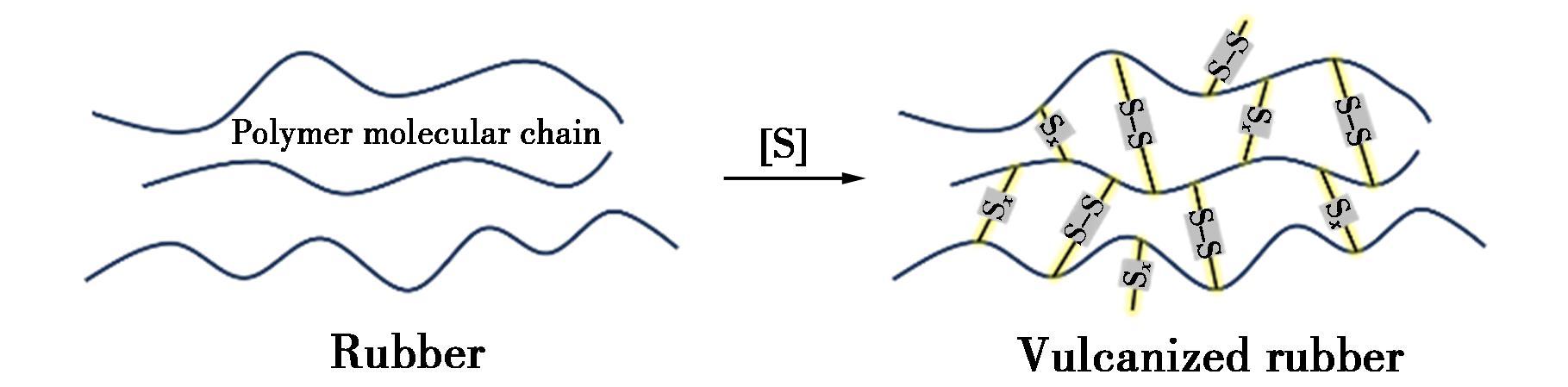
Vulcanization is one of the most important stages in the production of rubber products. During this process, polymer chains are transformed into a three-dimensional network through the formation of crosslinks. This significantly improves properties such as tensile strength, abrasion resistance, thermal stability, resilience, and durability.
However, sulfur alone is too slow for efficient industrial vulcanization. For this reason, vulcanization accelerators are widely used in rubber formulations. These chemicals increase the rate of the curing reaction and provide greater control over curing time, temperature, and crosslink structure.
What Are Rubber Vulcanization Accelerators?
Vulcanization accelerators are chemical compounds that increase the rate of reaction between sulfur, rubber, and other components of the curing system, reducing the time required for vulcanization.
In a conventional sulfur curing system, three major components are typically involved:
- Sulfur – the vulcanizing agent responsible for forming crosslinks
- Accelerator – increases and controls the rate of the curing reaction
- Activator – enhances the effectiveness of the curing system
Activators such as zinc oxide (ZnO) and stearic acid play an important role in activating sulfur vulcanization.
In simple terms:
Sulfur = Crosslinking agent
Accelerator = Reaction rate and cure control
ZnO + Stearic Acid = Cure system activation
Why Are Vulcanization Accelerators Essential in the Rubber Industry?
If rubber is cured using sulfur alone, the vulcanization process is extremely slow and is not practical for most industrial applications.
The use of accelerators allows manufacturers to achieve curing within a much shorter period and provides greater control over the overall process.
The main benefits of vulcanization accelerators include:
- Reducing curing time
- Increasing the rate of vulcanization
- Potentially reducing the required curing temperature
- Controlling the start and completion of the curing process
- Controlling crosslink density
- Improving the mechanical properties of rubber products
- Reducing energy consumption
- Designing curing systems according to the type of rubber and final application
The choice of accelerator also directly affects scorch safety, cure rate, and the type of sulfur crosslinks formed within the rubber network.
Types of Rubber Vulcanization Accelerators
Vulcanization accelerators can be classified into several major groups based on their chemical structure and curing behavior.
| Accelerator Group | Common Examples | Cure Rate | Main Characteristic |
|---|---|---|---|
| Sulfenamides | CBS, TBBS, DCBS, NOBS | Medium to Fast | Good balance between cure rate and scorch safety |
| Thiazoles | MBT, MBTS | Medium to Fast | Widely used with balanced curing performance |
| Thiurams | TMTD, TMTM, TBzTD | Fast to Very Fast | High cure activity |
| Dithiocarbamates | ZDEC, ZDBC, ZDMC | Very Fast | Suitable for high-speed curing systems |
| Guanidines | DPG, DOTG | Medium to Fast | Often used as secondary accelerators |
| Thioureas | ETU, DETU | Medium | Used in specific elastomer systems |
| Aldehyde-Amines | HMT | Slow to Medium | More limited applications in specialized systems |
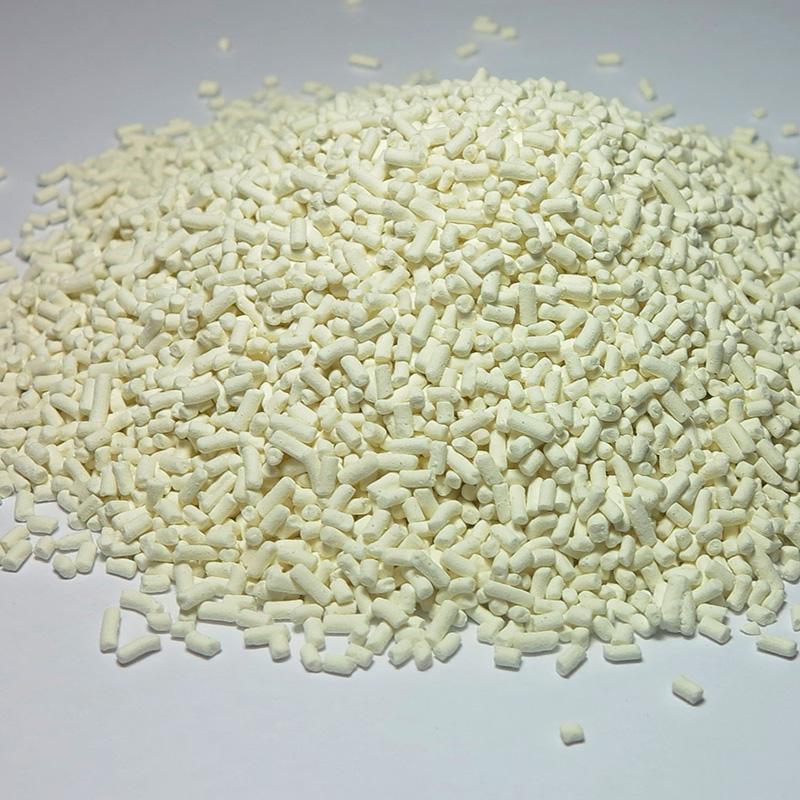
Sulfenamide Accelerators: A Common Choice in Tire Manufacturing
Sulfenamides are among the most important accelerator groups used in the rubber industry. CBS, TBBS, and DCBS are well-known examples.
One of the key advantages of this family is the balance between cure rate and scorch safety. This makes sulfenamides particularly suitable for many rubber compounds, including compounds used in tire manufacturing.
CBS
N-Cyclohexyl-2-benzothiazole sulfenamide (CBS) is one of the most widely used vulcanization accelerators.
CBS provides fast delayed action. This means that it offers good protection against premature vulcanization during the early stages of processing, while providing a relatively high curing rate once the compound reaches the appropriate curing temperature.
This combination of processing safety and curing performance has made CBS an important accelerator for a wide range of rubber and tire compounds.
TBBS
N-tert-Butyl-2-benzothiazole sulfenamide (TBBS) is another important member of the sulfenamide family.
Its curing behavior is similar to CBS, while its combination of scorch safety, curing rate, and final compound properties makes it suitable for a wide range of rubber formulations.
Thiazole Accelerators
Two well-known members of this group are:
MBT – Mercaptobenzothiazole
MBTS – Dibenzothiazyl Disulfide
These materials are among the established accelerators used in the rubber industry and can be used either individually or in combination with other accelerators.
MBT generally provides a faster curing response compared with systems without an accelerator, while MBTS can be used in combined accelerator systems due to its different curing characteristics.
Thiuram Accelerators
Important members of this family include TMTD and TMTM.
Thiurams provide high curing activity and can be used as primary or secondary accelerators in selected formulations.
For example, TMTD is considered a very fast accelerator.
However, the use of thiurams as primary accelerators can reduce scorch safety. For this reason, controlled amounts are often combined with primary accelerators such as sulfenamides.
Dithiocarbamate Accelerators
Dithiocarbamates are among the fastest-acting accelerator groups. Common examples include:
- ZDEC
- ZDBC
- ZDMC
These accelerators are suitable for applications requiring a high curing rate.
However, their high activity can also reduce process safety and increase the risk of scorch. Therefore, their dosage and combination with other accelerators must be carefully selected according to the manufacturing process.
Guanidine Accelerators
DPG (Diphenylguanidine) is the best-known member of this group.
DPG typically provides medium-to-fast curing behavior and is frequently used as a secondary accelerator in combination with primary accelerators.
Combining different accelerator types can provide greater control over curing behavior and the final properties of the rubber compound.
The Role of Accelerators in Rubber Crosslink Structure
One of the most important functions of accelerators is not simply increasing the curing rate. They can also influence the type and length of sulfur crosslinks formed within the rubber network.
During sulfur vulcanization, crosslinks can form as:
- Monosulfidic – C–S–C
- Disulfidic – C–S–S–C
- Polysulfidic – C–Sx–C
The sulfur-to-accelerator ratio and the overall curing system play an important role in determining the resulting network structure.
Conventional (CV), Semi-Efficient (SEV), and Efficient (EV) curing systems differ in their sulfur-to-accelerator ratios. As a result, they produce different crosslink structures and consequently different final rubber properties.
How the Curing System Affects Rubber Properties
| Curing System | Accelerator-to-Sulfur Ratio | Dominant Crosslinks | General Characteristics |
|---|---|---|---|
| CV – Conventional Vulcanization | Low | Polysulfidic | Good tensile strength and fatigue resistance |
| SEV – Semi-Efficient Vulcanization | Medium | Mixed | Balanced overall properties |
| EV – Efficient Vulcanization | High | Mono- and Disulfidic | Better heat resistance and reversion resistance |
Conventional systems generally produce a higher proportion of polysulfidic crosslinks, which can contribute to good tensile strength and fatigue resistance.
Efficient vulcanization systems generate a greater proportion of shorter crosslinks, which can improve thermal stability and resistance to changes in the crosslink network.
What Is the Difference Between an Accelerator and an Activator?
One common mistake in rubber compounding is treating accelerators and activators as the same type of material.
An accelerator directly influences the rate and pathway of the curing reaction, while an activator creates favorable chemical conditions that enhance the performance of the accelerator and sulfur.
One of the most widely used activator systems is:
ZnO + Stearic Acid
Zinc oxide plays an important role in sulfur vulcanization by contributing to the formation of active zinc-containing species involved in the curing process. Stearic acid also contributes to the formation of these active species.
Therefore, in a conventional formulation, the roles of the main components can be summarized as:
Sulfur → Vulcanizing agent
Accelerator → Cure rate and reaction control
ZnO → Activator
Stearic Acid → Co-activator
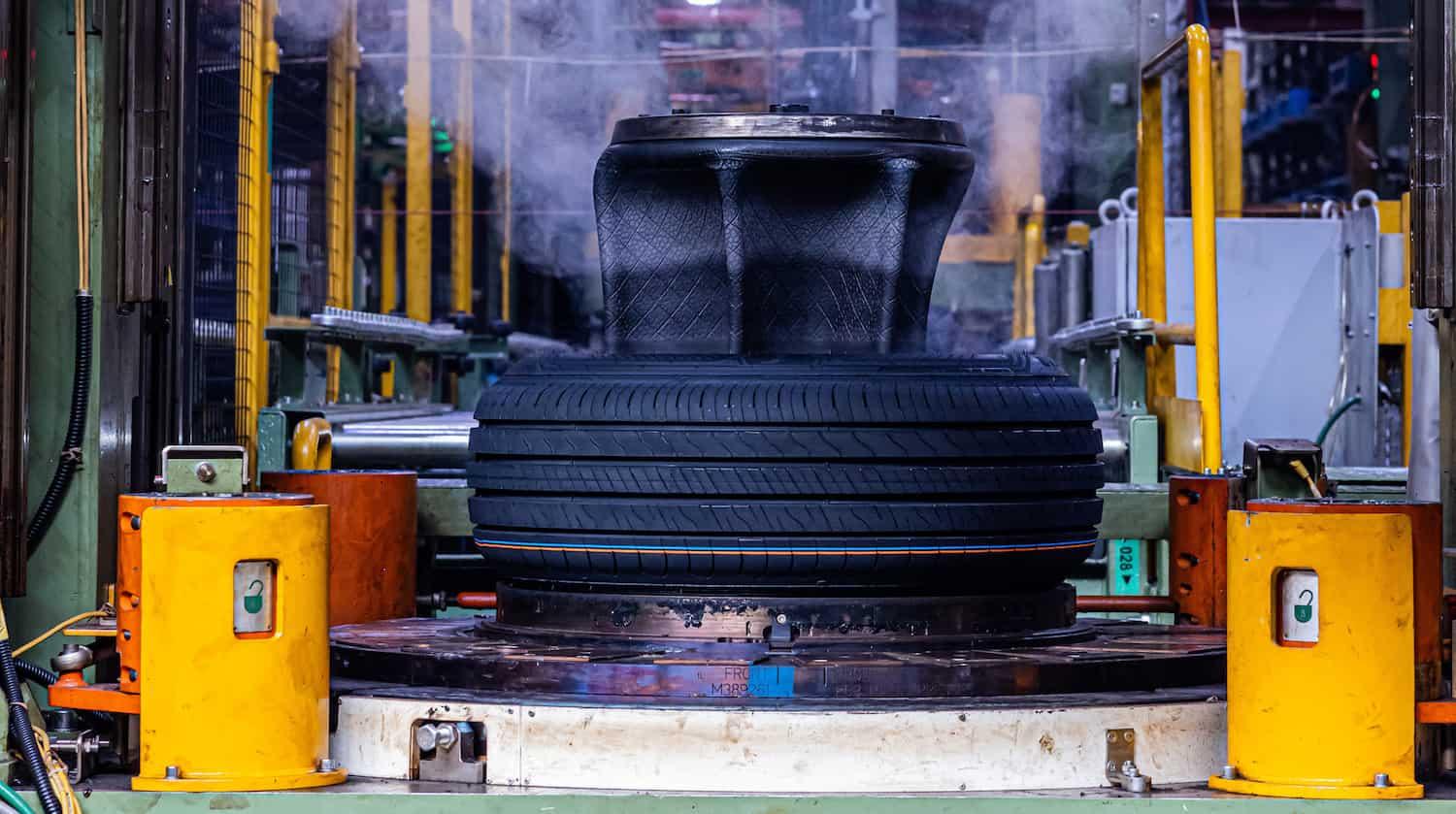
Applications of Vulcanization Accelerators in Tire Manufacturing
Precise control of the curing process is particularly important in tire manufacturing because tires must simultaneously achieve a combination of mechanical, thermal, and dynamic properties.
The correct accelerator system can influence:
- Tire curing time
- Process safety during mixing and forming
- Modulus and hardness
- Tensile strength
- Abrasion resistance
- Fatigue resistance
- Heat build-up
- Thermal stability
- Resistance to reversion
- Crosslink network structure
For this reason, selecting a single accelerator is often not sufficient. Instead, a curing accelerator system is designed according to the type of rubber, tire application, and curing conditions.
Studies of systems based on CBS, TMTD, MBT, and TBBS have also shown that changing the curing system can alter the ratio of mono-, di-, and polysulfidic crosslinks and consequently affect the final properties of vulcanized rubber.
How to Select the Right Vulcanization Accelerator
Selecting the appropriate accelerator depends on several factors:
Rubber Type → Product Type → Curing Temperature → Cure Time → Scorch Safety → Required Properties → Accelerator Selection
For example, when high scorch safety is required, a sulfenamide such as CBS or TBBS may be a suitable option.
For processes where a very high curing rate is the priority, thiurams or dithiocarbamates may be considered.
In practice, combining a primary accelerator with a controlled amount of a secondary accelerator can provide more precise control over the curing curve and final rubber properties.
Emerging Trends in Rubber Vulcanization Accelerators
Today, rubber manufacturers are looking beyond curing speed and product performance. Process safety, environmental sustainability, and the reduction of undesirable chemicals are becoming increasingly important.
One major area of interest is reducing the use of zinc compounds, particularly ZnO.
Although ZnO remains one of the most effective activators for sulfur vulcanization, environmental concerns associated with zinc have encouraged research into reducing its use and developing alternative activation systems.
Recent research has also focused on new curing systems for modern tire compounds, including SSBR/BR compounds and silica–silane systems.
Conclusion
Vulcanization accelerators are key components of rubber formulations. By increasing the rate of the vulcanization reaction, they enable faster, more efficient, and more controllable production of rubber products.
Materials such as CBS, TBBS, MBT, MBTS, TMTD, ZDEC, and DPG are used in different curing systems depending on the rubber type and the desired final properties.
The differences between these materials are not limited to curing speed. Scorch safety, crosslink density and structure, thermal resistance, and mechanical properties can also be significantly affected by accelerator selection.
Therefore, selecting the right accelerator should be considered part of the overall curing system design, rather than simply choosing a chemical to increase the speed of vulcanization.
FAQ
A rubber vulcanization accelerator is a chemical compound that increases the rate of the vulcanization reaction. It helps reduce curing time and provides better control over curing temperature, cure rate, and crosslink structure. Accelerators are essential for achieving efficient and consistent rubber processing in industrial applications.
CBS and TBBS belong to the sulfenamide family and are widely used because they provide a good balance between curing speed and scorch safety. TMTD belongs to the thiuram family and provides a much faster curing rate, but may offer lower scorch safety when used as a primary accelerator. The appropriate choice depends on the rubber type, processing conditions, and required final properties.
Selecting the right accelerator depends on several factors, including the type of rubber, product application, curing temperature, cure time, required scorch safety, and desired mechanical and thermal properties. In many formulations, a primary accelerator is combined with a secondary accelerator to achieve more precise control over the curing curve and final rubber properties.








One Response