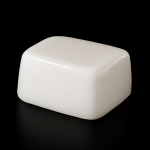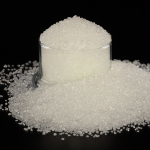
A truck tire, a medical glove, and a foam mattress seem to have nothing in common, yet the raw material for all three comes from the same tree. Natural rubber is harvested from the sap of the Hevea brasiliensis tree and, depending on how it is processed, becomes products built for very different industries.
The three most common forms on the market are SMR, RSS, and latex. In this article, we explain how each one is produced, how they differ, and which industries rely on them.
How Is Natural Rubber Produced?
Workers make cuts in the tree bark to collect a milky white sap called latex. Fresh latex contains a large amount of water, and from this point the process splits into two paths:
- The liquid path: Latex is concentrated and stabilized, then delivered to factories as a liquid.
- The dry path: Latex is coagulated and dried into solid sheets or blocks. SMR and RSS come from this path.
SMR: Standard Malaysian Rubber
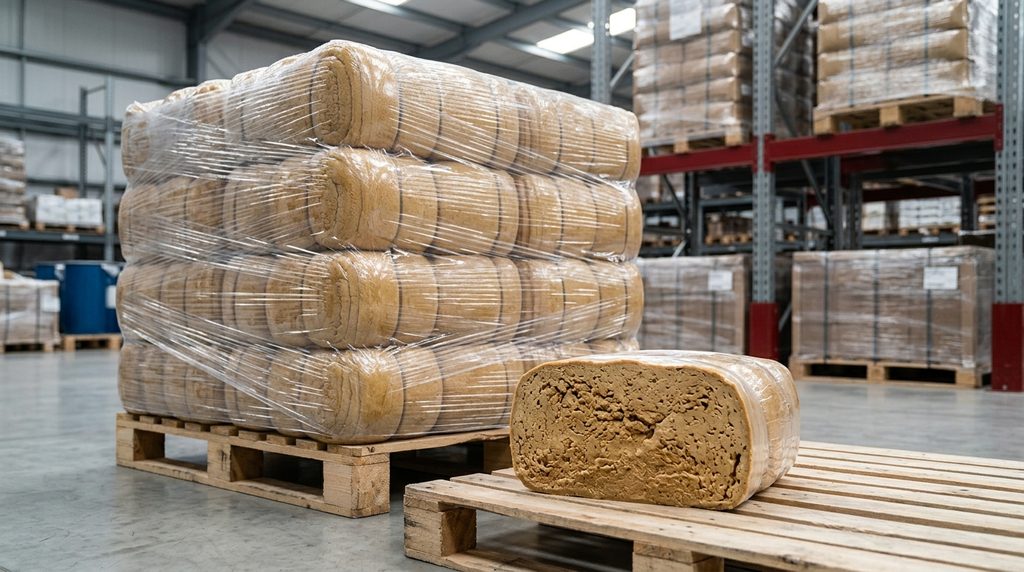
SMR stands for Standard Malaysian Rubber and belongs to the group of technically specified natural rubbers (TSR). In this process, coagulated rubber is shredded, washed, dried, and pressed into bales.
The key feature of SMR is that its quality is measured by laboratory tests, not by appearance. Indicators such as dirt content, ash, volatile matter, and Mooney viscosity are defined for each grade. The number in the name usually refers to the maximum allowed dirt content; in SMR 20, for example, it is 0.20 percent. The result is consistent, predictable quality, which matters greatly for continuous industrial production.
RSS: Ribbed Smoked Sheet
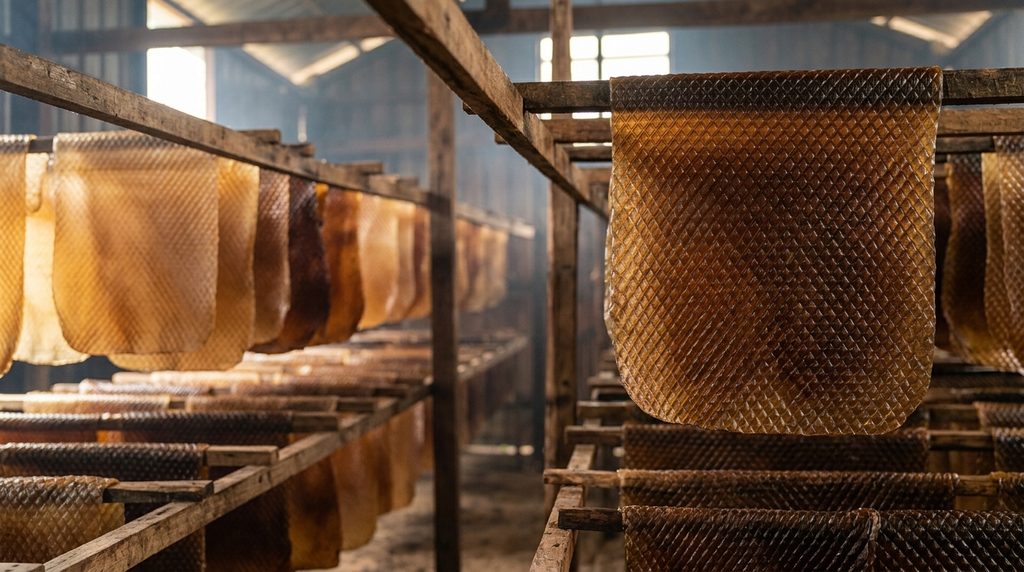
RSS stands for Ribbed Smoked Sheet. Latex is coagulated with acid, passed through grooved rollers to form ribbed sheets, and then dried for several days in a smokehouse. The smoke removes moisture and prevents mold growth.
Unlike SMR, RSS is graded visually, based on clarity, color, bubbles, and spots. Grades range from RSS1 (the best) to RSS5. RSS is known for high tensile strength and good tear resistance.
60% Latex: Liquid Natural Rubber
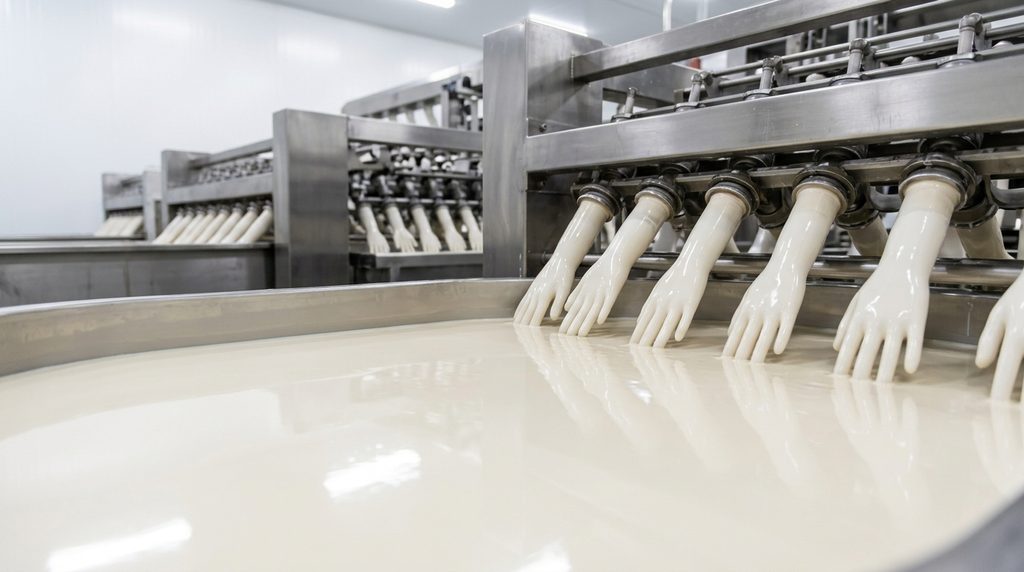
Fresh latex is concentrated by centrifuge until its dry rubber content reaches about 60 percent. Ammonia is added to prevent coagulation during transport and storage. The two common types are HA (high ammonia) and LA (low ammonia with secondary stabilizers).
Because latex is liquid, manufacturers can coat it directly onto molds, foam it, or blend it with other materials. This is what sets its uses apart from dry rubber.
SMR vs RSS vs Latex
| Property | SMR | RSS | 60% Latex |
|---|---|---|---|
| Physical form | Solid bale | Solid ribbed sheet | Liquid |
| Drying method | Industrial dryer | Smokehouse | Not dried |
| Grading method | Laboratory tests | Visual inspection | Dry rubber and ammonia content |
| Key strength | Consistent quality | High tensile strength | Suited to dipping and foaming |
| Common packaging | Bales on pallets | Bales of sheets | Drums, IBCs, or flexitanks |
Industrial Uses of Natural Rubber
Tire Industry
The tire industry is the world’s largest consumer of natural rubber. Natural rubber generates less heat in motion and resists tearing, which is why its share is higher in truck, bus, and heavy equipment tires that run under heavy loads than in passenger car tires. SMR is common on high-volume tire lines thanks to its consistent quality, while RSS is used in compounds that need high strength. The green tack of natural rubber also helps tire layers bond before curing.
Automotive and Anti-Vibration Parts
Engine mounts, suspension bushings, and rubber bumpers must compress repeatedly and return to their original shape. The high elasticity and fatigue resistance of natural rubber make it a good fit for these parts. The same logic applies to structures: bridge bearings and seismic isolators for buildings are often made from natural rubber.
Conveyor Belts, Hoses, and Industrial Rubber
In mines, cement plants, and loading lines, conveyor belts face constant abrasion and impact. The abrasion resistance of natural rubber extends their service life. Industrial hoses, roller coverings, and wear-resistant liners are other uses of dry rubber in this sector.
Footwear and Consumer Products
Shoe soles need good grip, flexibility, and durability. RSS and SMR are used in shoe soles, rubber flooring, toys, and general rubber goods.
Medical Products and Gloves
Surgical and examination gloves, catheters, and some medical devices are made by dipping: a mold is dipped into latex and a thin rubber layer forms on its surface. High elasticity, a good tactile feel, and tear resistance have made natural latex a well-established choice for these products. Balloons and rubber thread are made the same way.
Foam, Mattresses, and Textiles
Latex can be whipped into foam and cured in a mold to produce an elastic, open-cell foam. Mattresses, pillows, and upholstery are the main uses of this foam. In the textile and carpet industry, latex is used for carpet backing and for bonding fibers.
Adhesives
Latex is the base of many water-based adhesives in the footwear, paper, and packaging industries. Dry rubber, once dissolved in a solvent, is used in rubber and contact adhesives and is usually formulated with hydrocarbon resins.
Storage Tips
- SMR and RSS: Store in a dry, cool warehouse away from direct sunlight. Natural rubber may harden and crystallize in cold weather, which is reversed by gentle warming before use.
- Latex: Keep containers sealed so ammonia is not lost, protect from freezing and high heat, and stir gently before use.
For a rubber compound to keep its properties over time, antioxidants and vulcanization accelerators matter just as much.
Conclusion
SMR delivers consistent quality for mass production, RSS offers high strength for demanding products, and latex makes thin, foamed, and dipped products possible. Understanding these differences helps you choose a raw material that fits your production line and final product.
Hamiico began importing natural rubber in 1993 and today supplies SMR, RSS, and 60% latex with technical documents for every shipment. Visit our natural rubber page to see all products, or contact Hamiico’s specialists.
Frequently Asked Questions
Both are dry natural rubbers. SMR comes in blocks and its quality is measured by laboratory tests, while RSS is a smoked sheet graded by visual inspection.
The number usually indicates the maximum allowed dirt content. In SMR 20, dirt content is at most 0.20 percent by weight.
It means about 60 percent of the concentrated latex weight is dry rubber, and the rest is mostly water.
Natural rubber generates less heat under load and resists tearing better, which is critical for heavy-duty tires.
HA latex contains more ammonia for stability, while LA latex uses less ammonia with secondary stabilizers and has a milder odor.