
The adhesive on a water bottle label, the paint that keeps road markings bright, and the compound that holds tire layers together before curing all share one ingredient: hydrocarbon resin.
C5 and C9 resins are the two main families in this group. Their names are similar, but they behave very differently in a formulation. Choosing the wrong one can compromise tack, the color of the final product, or compatibility with the base polymer.
In this article, we explain where each resin comes from, how they differ, and how they are used in the adhesive, paint, and tire industries.
What Is Hydrocarbon Resin?
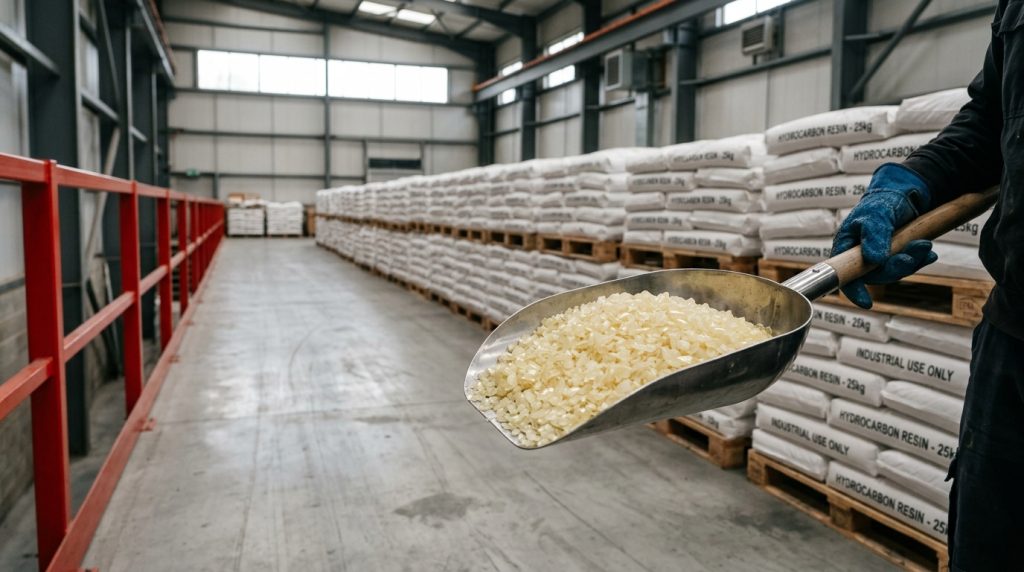
Hydrocarbon resin is a low molecular weight polymer produced from petroleum fractions of steam cracking units. These resins are usually supplied as solid flakes or granules and soften at a defined temperature.
Their main role in a formulation is to provide tack, improve processability, and adjust hardness and gloss. This is why they are also called tackifiers.
The letter C and the number beside it refer to the number of carbon atoms in the feedstock molecules. C5 is made from the five-carbon fraction and C9 from the nine-carbon fraction. This difference in feedstock determines the chemical structure and applications of each resin.
C5 vs C9 Resin: Key Differences
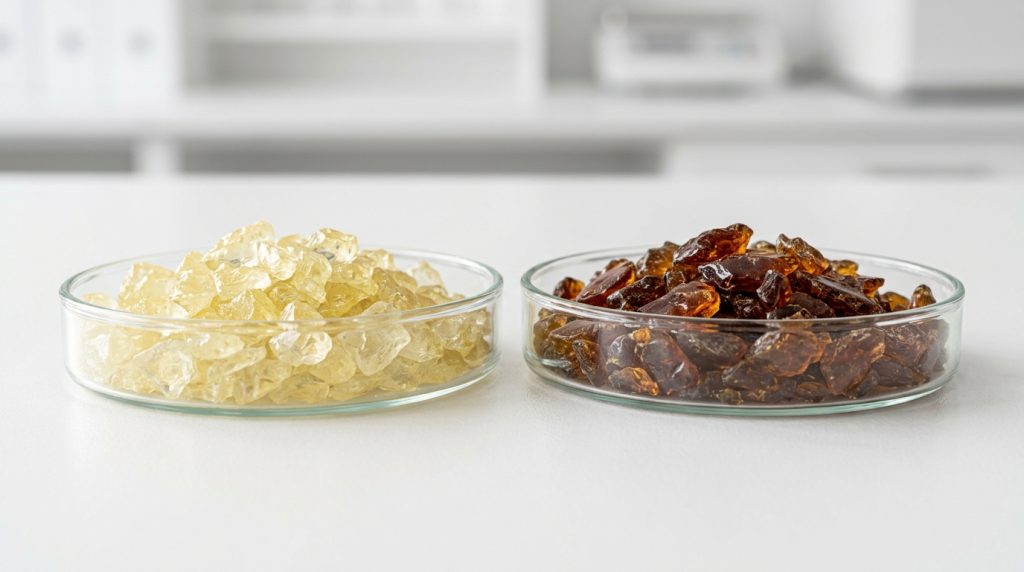
In short: C5 is lighter in color and more flexible, and it is more compatible with natural rubber and non-polar polymers. C9 is darker and harder, and it works better with SBR, paints, and more polar systems.
| Property | C5 Resin (Aliphatic) | C9 Resin (Aromatic) |
|---|---|---|
| Main feedstock | Piperylene and other C5 compounds | Vinyl toluene, indene, and alpha-methylstyrene |
| Chemical structure | Aliphatic (open chain) | Aromatic (ring structure) |
| Color (Gardner scale) | Light, typically about 1 to 5 | Darker, typically about 6 to 12 |
| Softening point | Most common grades about 90 to 100 °C | Wider range, up to about 140 °C |
| Compatibility | Natural rubber, SIS, polyolefins | SBR, alkyd resins, vegetable oils |
| Key strength | High initial tack, flexibility | Hardness, gloss, water resistance |
| Main applications | Hot melt and pressure-sensitive adhesives, road marking paint | Paints and coatings, printing inks, rubber compounds |
Beyond these two, there are also C5/C9 copolymer resins that balance the properties of both. Hydrogenated grades are nearly colorless and odorless and are used in sensitive applications such as hygiene product adhesives.
The figures in the table are common market ranges. Exact values for each grade should be taken from that product’s technical data sheet (TDS).
Hydrocarbon Resin in the Adhesive Industry
The adhesive industry is the largest consumer of C5 resin. A base polymer alone does not provide enough initial tack, and the resin makes up for it.
- Hot melt adhesives: In carton sealing, bookbinding, and packaging adhesives, C5 resin works with EVA or SIS to control setting speed and bond strength.
- Pressure-sensitive adhesives (PSA): In tapes and labels, C5 resin creates the instant tack that bonds with light pressure.
- Rubber-based adhesives: The good compatibility of C5 with natural rubber makes it suitable for rubber and solvent-based adhesives.
Where appearance matters, as in clear labels, light C5 grades or hydrogenated resins are the first choice. Because of its darker color, C9 is used less in this segment.
Applications in Paints, Coatings, and Inks
In the paint industry, both resin types have their place, and the choice depends on the type of paint.
- Thermoplastic road marking paint: Road markings are mostly applied with hot melt paints, and C5 resin is the main part of their binder. Its light color preserves the whiteness and yellowness of the line and improves abrasion resistance.
- Oil-based and alkyd paints: C9 resin improves film hardness, gloss, and drying speed.
- Anti-corrosion coatings: The aromatic structure of C9 increases resistance to water and chemicals, making it useful for coating steel structures.
- Printing inks: In offset and gravure inks, C9 improves adhesion and print gloss.
A simple rule: where light color and flexibility matter, choose C5. Where hardness, gloss, and chemical resistance come first, C9 is the better option.

Applications in Tires and Rubber Products
In the rubber industry, hydrocarbon resin makes up a small share of the compound, but its effect on build quality and product performance is significant.
- Green tack: A tire is built from several layers of uncured compound stacked on a building drum. C5 resin helps these layers stick together and stay in place before vulcanization.
- Tire tread: C9 and other aromatic resins in tread compounds, especially SBR-based ones, help improve wet grip and compound processability.
- Processing aid: Both resin types lower compound viscosity and make it easier to disperse fillers such as carbon black and silica.
- Technical rubber goods: In belts, hoses, and industrial parts, resin improves adhesion between rubber and fabric layers.
The choice between C5 and C9 in a rubber compound depends on the base rubber: natural rubber compounds are usually more compatible with C5, and SBR-based compounds with C9.
How to Choose the Right Grade
Before buying, check these five properties in the product TDS:
- Softening point: Measured by the Ring & Ball method. A higher softening point means a harder adhesive or film with better heat resistance.
- Gardner color: The lower the number, the lighter the resin. This matters most for white or clear products.
- Compatibility with the base polymer: Usually assessed with indicators such as cloud point. Poor compatibility causes haze and loss of tack.
- Acid value and ash content: These affect thermal stability and the purity of the final product.
- Physical form: Flakes, pastilles, or granules. The right form makes dosing and melting on the production line easier.
Always test a sample in your own formulation before placing a bulk order. Two grades with similar specifications on paper can behave differently on the production line.
Storage and Handling Tips
Hydrocarbon resin is a stable material, but it is sensitive to heat. Resins with a lower softening point may stick together and form lumps in a warm warehouse.
- Store bags in a dry, covered area away from direct sunlight.
- Avoid stacking pallets too high, so the weight does not cause caking in the lower layers.
- Keep the warehouse away from heat sources and open flames, as resin dust is flammable.
- Use stock in order of arrival (FIFO) and check shelf life in the manufacturer’s TDS.
Conclusion
C5 resin is built for tack, light color, and flexibility, while C9 resin is built for hardness, gloss, and resistance. In many formulations, the right choice depends on the base polymer, the color of the final product, and its operating conditions.
Hamiico sources hydrocarbon resins from reputable international manufacturers and provides technical documents such as the TDS and COA with every shipment. Visit our hydrocarbon resins product page to see available grades, or contact Hamiico’s specialists for help choosing the right grade.
Frequently Asked Questions
C5 is aliphatic, light in color, and flexible, and is mostly used in adhesives. C9 is aromatic, darker, and harder, and is mostly used in paints, inks, and rubber compounds.
In most hot melt adhesives, C5 resin or its hydrogenated version is chosen for its light color and compatibility with EVA and SIS.
Its light color preserves the whiteness of the line, and in hot melt formulations it provides good adhesion to asphalt and abrasion resistance.
Resin provides tack between uncured tire layers before curing, and in tread compounds it helps processability and road grip.
It combines the properties of both types and suits formulations that need broad compatibility and balanced tack.










One Response