
Rubber Vulcanization Accelerators: Types, Applications, and Their Role in the Vulcanization Process
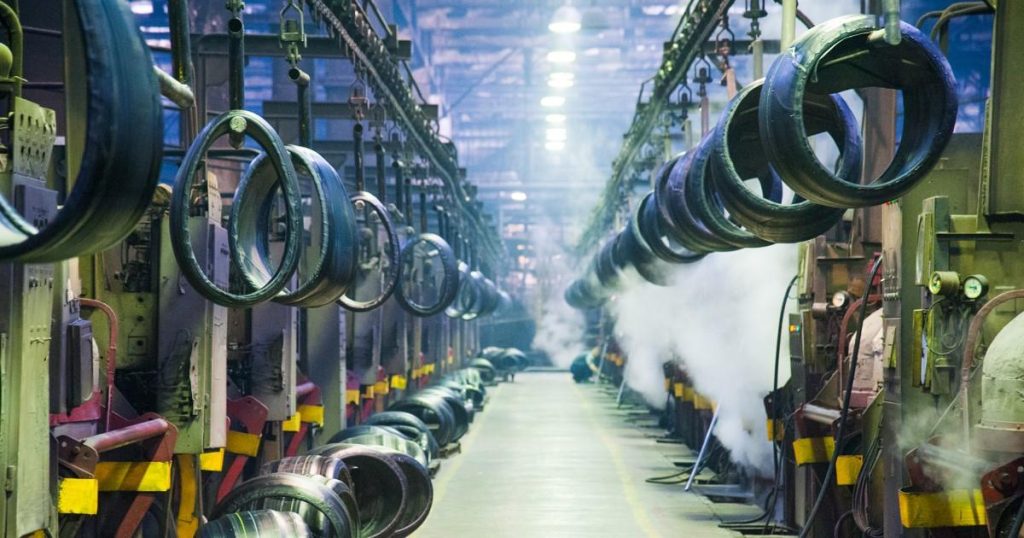
A practical guide to rubber vulcanization accelerators, covering major accelerator types, curing systems, crosslink structure, applications, and selection criteria.
The Role of Antioxidants in Extending the Life and Durability of Rubber Products
Rubber products are not only subject to mechanical pressure and abrasion over their service life. Oxygen, ozone, heat, light, and mechanical stress gradually alter the structure of rubber, reducing flexibility, increasing hardness, causing cracking, and degrading mechanical properties. This process, known as rubber aging, is one of the key factors limiting the service life of […]
How Do Rubber and Plastic Additives Affect Material Properties? A Guide to PVI, ULTRASIL, AZO and DCP
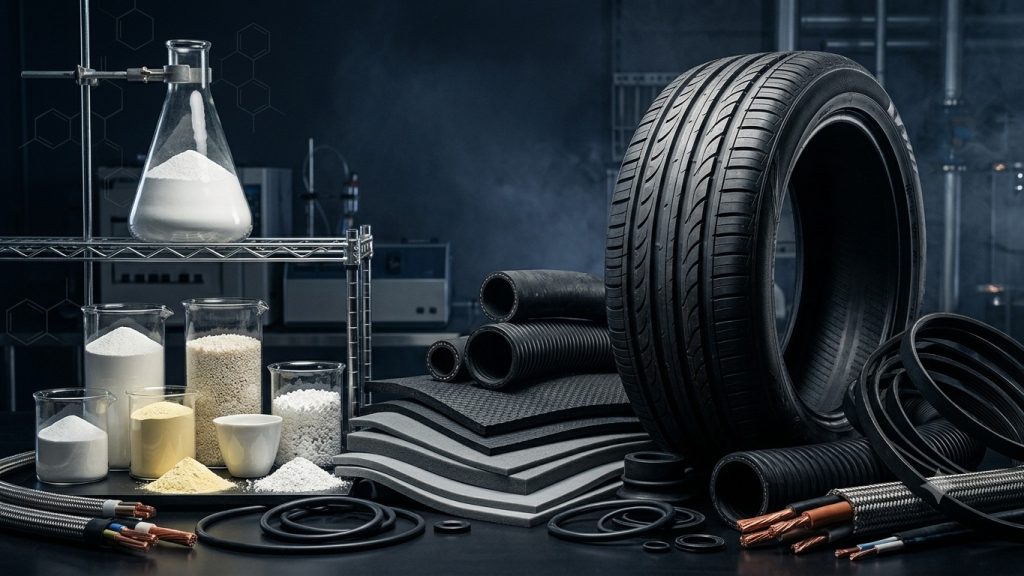
Rubber and plastic additives play a critical role in controlling processing conditions and improving the final properties of polymer products. This article examines four important additives: PVI, ULTRASIL, AZO, and DCP. PVI helps prevent premature vulcanization and improves processing safety; ULTRASIL, a precipitated silica, reinforces rubber and can improve abrasion resistance; AZO acts as a chemical blowing agent for producing lightweight cellular structures; and DCP creates crosslinks that can improve the thermal, chemical, mechanical, and dimensional properties of polymers. The article also reviews the main industrial applications of each additive and the key factors to consider when selecting additives for rubber and plastic formulations.
What Are the Most Common Types of Plastics in the World? Understanding the Strongest and Most Consumed Industrial Polymers

In this article, we examine the most common types of plastics worldwide. From Polyethylene (PE) and Polypropylene (PP) to advanced engineering plastics like PEEK, discover the properties, applications, benefits, and differences of these essential industrial polymers that power the modern world.
Which Industries Are the Largest Rubber Consumers? Top 10 Industries with Highest Rubber Consumption Worldwide
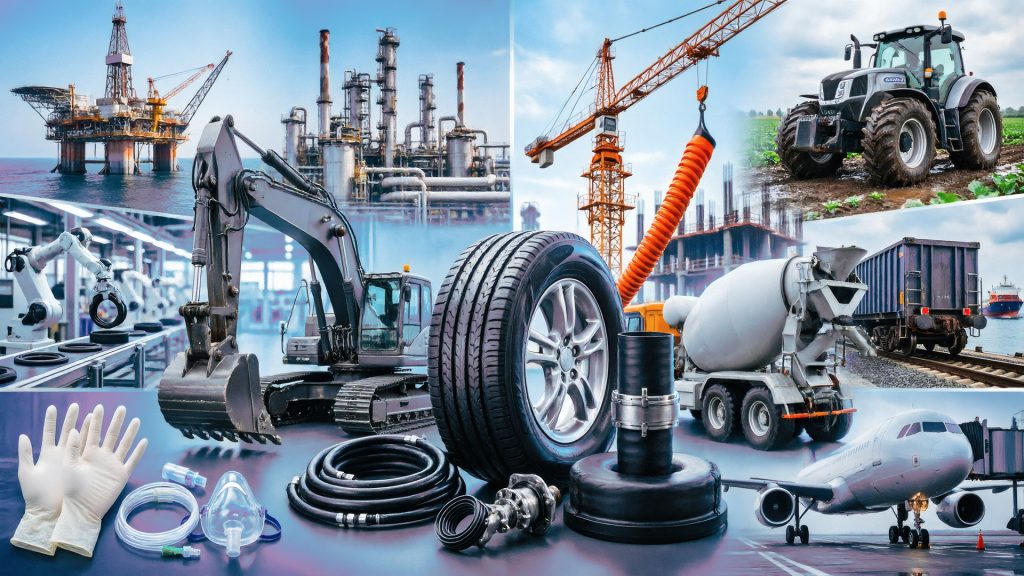
Discover the largest rubber consumers worldwide in this comprehensive industry analysis. While the automotive sector dominates, mining, construction, oil & gas, and healthcare also drive massive global demand. Explore the top 10 sectors, key applications, and current market statistics.
Is the World Heading Toward a Rubber Shortage? Examining the Future of the Rubber Industry and Its Alternatives

An in-depth look at whether natural rubber resources are running out, the key threats to global production, and the leading alternative materials that could shape the future of the tire and rubber industry.